
Jul 22nd, 2026
When the Merchant Doesn't Fit the Box
TL;DR
Kitty and Jason talk with Allen Kopelman of Nationwide Payment Systems about why modern merchant onboarding is less about forcing businesses into neat categories and more about clearly explaining how the business actually works. The episode covers flow of funds, MCC classification, future delivery, marketplaces, user-generated content, regulated activity, documentation packages, synthetic identity fraud, AI-assisted review, and why online processors that “approve first and investigate later” can create serious problems for merchants that do not understand their own risk profile. The practical takeaway is that complicated does not automatically mean risky, but unexplained complexity almost always looks like risk to an underwriting team.
The Box Is Still There. The Merchant Moved.
Merchant onboarding used to feel cleaner than it does now.
A business sold a thing. A customer paid for the thing. The processor assigned a category. The underwriter reviewed a relatively familiar model and moved on. Not perfect, obviously, because this is payments and perfection is not really our brand. But at least the boxes did some useful work.
Now a merchant might take a deposit through a payment link, finish the transaction in person, bill the balance later, store a token for future use, accept a bank payment, and issue a refund through a different channel. The application still wants a neat answer. The business model has other plans.
In this episode of Cents Chat, Kitty and Jason sit down with Allen Kopelman of Nationwide Payment Systems to talk about what happens when a legitimate merchant does not fit neatly into the underwriting box.
Complicated Is Not the Same as Risky
One of the strongest themes in the conversation is that the industry often treats complicated and risky like they mean the same thing.
They do not.
A merchant can be legitimate and still be hard to explain. Maybe they have multiple sales channels. Maybe fulfillment happens later. Maybe they operate a marketplace. Maybe there is user-generated content. Maybe money moves through several parties. Maybe the obvious MCC makes the business look like collections, money transmission, adult content, or future delivery even when that first impression is incomplete.
That is where context matters.
Allen makes the point that the onboarding conversation now starts with a much more important question: what does the flow of funds look like? Jason frames it as the plot of the payment story. Who owns the money? Who accepts it? Who controls it? Where does it settle? What obligations exist after authorization? Who handles refunds? Who can initiate future charges?
If those characters are missing, underwriting will fill in the blanks. Usually with the most conservative interpretation available.
The File Has to Tell One Story
A good underwriting package is not just a completed application.
It is the application, website, sample invoices, bank statements, contracts, fulfillment details, policies, flow charts, business licenses, insurance, and payment workflow all telling the same story. When those pieces conflict, even innocent mistakes can look like concealment.
Allen gives a simple example: businesses copying terms, refund policies, or privacy language from another site and forgetting to update company names, addresses, or details. That might be sloppy, not malicious. But to an underwriter, sloppy documentation around a complicated business does not inspire confidence.
The same issue shows up with merchants that have multiple products or business lines. Sometimes the answer is not to force every activity through one merchant account. Sometimes the better path is to separate the models so underwriting can evaluate each one clearly.
Synthetic Identity Raises the Stakes
The fraud side makes this even harder.
Allen talks about the shift from straw signers to synthetic signer patterns, where fraudsters use stolen identity files, real personal data, convincing documents, credible websites, and enough consistency to pass basic checks. Jason ties this back to AI: the same tools that help review files faster can also help bad actors create more polished packages.
That does not mean AI flags should make the decision. It means reviewers need better evidence, better context, and enough human judgment to decide whether the story actually makes sense.
The takeaway is blunt: onboarding is not just about speed. It is about understanding.
A complicated merchant should not try to find a prettier label. It should explain the real business clearly enough that the right risk questions get asked. Because if the merchant does not tell the story, underwriting will write its own version.
Featuring

Kitty
The Host

Jason
The Nerd
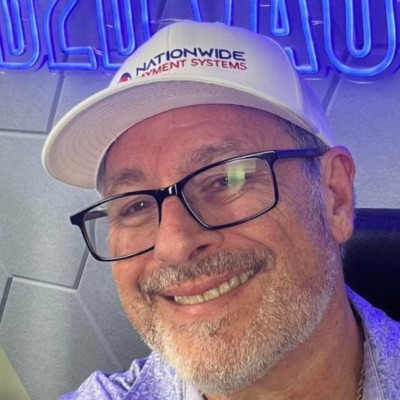
Allen Kopelman
Guest Speaker
Transcript
Announcer: Welcome to Cents Chat, the podcast where payments meet personality. From tech trends to legal twists, compliance quirks to marketplace moves. Kitty is here to keep ISVs, PayFacs, and marketplaces ahead of the curve. Get ready for insights, a few laughs, and the occasional compliance scare. Let's dive in and make payments make sense.
Kitty: Not that long ago, merchant onboarding started with a few pretty clean boxes. Done. Now a merchant can take a deposit through a payment link, finish the transaction in person, bill the balance later, store a token for future work, accept a bank payment, and issue a refund through a completely different channel. The old boxes are still on the application. The business just stopped fitting inside them.
So what happens when a legitimate merchant looks confusing before anyone has even asked the right questions? Today we're talking about how to unpack the complicated before underwriting turns confusion into a no. Jason, I feel like the phrase card present versus card not present used to do a lot more work than it does today. It gave you a decent picture of how a merchant sold, how the customer paid, and what kind of risk might show up.
Now it can describe one moment in a transaction, but not necessarily the business around it.
Jason: Yeah, Kitty, exactly. Those labels still matter, but they're not the whole architecture anymore. A merchant might begin a sale on the phone, send a text message payment link, complete the transaction in person, tokenize a card for future use, and reconcile everything through some obscure invoicing workflow. From the customer's perspective, that can feel like one clean experience. From an underwriting perspective, it raises a stack of questions.
Who's actually the seller? When was the service delivered? Who can initiate a future charge or chargeback? How long is the merchant exposed before fulfillment? Who handles refunds? And where does the money actually go after the authorization is complete?
Kitty: Which is why “we take payments” has become one of those technically correct answers that explains almost nothing. A merchant can be completely legitimate and still sound risky because the person reviewing the application can't see the operating model behind it.
Jason: Yeah, Kitty, those 20-page underwriting forms are designed to compress a business into a manageable set of facts. That works when businesses are easy to categorize. When the merchant has multiple channels, unusual fulfillment, regulated activity, repayment and subscription workflows, delayed delivery, or several parties touching the money, the compression starts dropping important context. The missing context doesn't look neutral. It looks like risk.
Kitty: And fraud is making that harder too. Last week you wrote the Cents Chat article “AI Fraud Tools Need Governance Before They Need a Sales Deck.” A big part of that article was synthetic identity fraud. AI is helping good teams review information faster while also helping bad actors create much more convincing information. How does that connect to merchant onboarding?
Jason: Well, Kitty, it connects directly. Onboarding used to rely heavily on whether documents looked right, whether identity answers matched, and whether the application was internally consistent. Those controls still matter, but the cost of creating a polished fake has dropped. Fraudulent packages can now include credible websites, altered PDFs, convincing bank checks or bank letters, and enough stolen identity data to get through the basic fraud checks.
At the same time, defensive tools can inspect file structure, compare data across documents, and flag inconsistencies that might not be visible to the naked eye. The problem is that the tool is not accountable for the decision. Somebody still has to understand the merchant, understand the evidence, and decide whether or not the story makes sense.
Kitty: So today's episode isn't really about making onboarding faster. It's about making the merchant understandable. Our guest spends a lot of time doing exactly that. Allen Kopelman runs Nationwide Payment Systems, a payments company that has worked with merchants across straightforward, regulated, high-risk, and just plain complicated environments for more than two decades. Allen, welcome to Cents Chat.
Allen Kopelman: Thank you for having me on today. Nationwide Payment Systems started in 2001. Prior to that, I was in the hospitality industry. I owned a restaurant and worked for a big hotel company, so I had familiarity with merchant services and suffered sometimes at my restaurant dealing with things like chargebacks, broken terminals, and not understanding the statement.
And by accident, I ended up in this business. I worked for somebody for about a year and learned everything you should not do, because I believe business owners need to be treated fairly and also educated on how this business actually works. What are the nuts and bolts behind that?
People are getting very creative, like what Jason was talking about, where you have all these businesses with all different parts that now people sometimes refer to as omnichannel. Somebody has business everywhere: a website, an ERP, invoicing, payment links, outside salespeople, all different ways business is coming into an organization.
And beyond that, you have people trying to create marketplaces, right? ISOs have to deal with that too and unbundle, okay, who are the merchants on these marketplaces? What are they selling? Are they selling legal products, or are they not selling legal products? That's why it's important not just after you underwrite the merchant. You also have to underwrite the transaction.
Jason: Allen, I want to touch on something you said there that I think is key to this conversation. Obviously, today you're a payments professional. You said you accidentally got into payments. I want to know why you're not like the rest of us, and as a young child didn't dream about a future in payments, right? I feel like that's where the rest of us in this industry fall: lifelong goal, be in payments.
Allen Kopelman: No, I wanted to be a chef, and that's what I did. I went to culinary school. I did an apprenticeship in Atlanta, then moved to Dallas. I got plenty of write-ups in newspapers, was named one of the 10 best chefs in Texas, then moved back to Florida. My restaurant was named one of the 10 best restaurants in Palm Beach County, and that was like 30 years ago. I'll challenge you in barbecue any day. I made plenty of barbecue when I was in Texas.
Kitty: Well, Allen, let's start with the biggest change. When a merchant comes to you today, what makes the onboarding conversation different from the conversation you might have had 10 or 15 years ago?
Allen Kopelman: Today, you have to ask them, what does their flow of funds look like? What does their business look like? People come up with businesses I've never heard of before. We had someone come to us recently in the cost recovery business. I'm like, what the heck is that?
The guy had to write out a better description of what it is. We said, you need to have a better description on your website. We need you to write up your background of why you're able to do this business and who your customers are going to be. We sent it to a few banks. Some looked at it like it was a collection company and didn't want to do it. Then we sent it to somebody else and got them to actually listen and read, because a lot of times underwriters don't read all the documents you send over to them.
It's important to sit down and have access to the underwriters. Being in the business 25 years helps, because I know owners of ISOs, I know who their underwriters are, and I can get them on the phone and say, listen, I need to explain this business to you.
The other thing merchants don't realize is they think they can just collect money and then move it to other people, like Jason was talking about before, paying other people. Well, that gets into a whole bunch of AML, anti-money laundering rules and regulations. You can't just do that.
Kitty: I really like that distinction because the industry tends to use complicated and risky like they mean the same thing. When you first look at a merchant that doesn't fit the obvious box, what are you trying to separate there?
Allen Kopelman: We try to separate what is the business, right? What is the core business? And the other thing is banks are going to listen if you send them bank statements or financials on people that have a lot of money. They're more apt to listen. Somebody sends over some bonehead idea and there's $500 in the bank account or $100, the bank is not going to take that business seriously, especially when you're talking about moving money around or something complicated.
Jason: Yeah, it's a huge point, Allen. Being well funded makes a big difference in getting obscure things approved. I think another important point that you touched on is how the business is being classified. We tend to classify businesses via a finite number of MCC codes, and that provides a label to what that business is.
But it's not always the full description of the business. If the label points the underwriter toward collection, money transmission, future delivery, or some other sensitive or risky area, the rest of the file has to explain why that first impression is incomplete. Otherwise, the system is just going to evaluate that merchant against the wrong risk model.
Allen Kopelman: Yeah. And even today, when you talk about future delivery of service, all of a sudden during COVID, everybody wanted to start all these businesses. Even before COVID, drop shipping became super popular. And drop shipping today is a big problem because we ask people, okay, drop shipper, no problem. Where's it coming from?
The minute they tell me it's coming from China or some other country, I don't want anything to do with that merchant.
Kitty: Now, Allen, let's get practical. A merchant says, “We're a service business and customers pay us.” That sounds simple. What do you need to know before you can decide whether it's actually simple?
Allen Kopelman: We're going to look at their website. We're going to ask what the service is. We're going to ask them for sample invoices. Then we're going to ask how they are going to collect the money.
A lot of AC companies or garage door companies, or we have a company that goes out and changes oil and tires on people's cars, you have to understand the whole makeup of what they're doing. How are they doing it? How are they collecting the money? What kind of warranties are they offering? With service businesses, are they running it out of their house? Maybe they have a warehouse. Do they have a business license? Do they have insurance? You have to make sure these are legitimate businesses.
Jason: Yeah, and one of the things you touched on that I always come back to is the flow of funds. The flow of funds is the plot of the payment story. It tells you who owns the money, who accepts it, who controls it, where it settles, and what obligations exist after the transaction. And if there are missing characters in that plot, underwriting usually fills in the blanks with the most conservative interpretations.
Allen Kopelman: You have to just understand how their business is working.
Kitty: So, Allen, you've worked with businesses that banks might misunderstand from the first sentence. Can you walk us through a general example where the business was legitimate, but the obvious label made it sound like something else?
Allen Kopelman: I've worked with a lot of startup companies. I had somebody call me once after they heard a podcast that had this business, and it was basically a creator platform. They couldn't get their account approved by anybody, and they couldn't understand why. It all came down to compliance.
We said, well, we need to have a meeting with you. We need to talk about what's going to be required for you to have this platform, and you have to understand, once you take in the money, you have creators. User-generated content is something that's listed by Visa and Mastercard. It's a regulated industry.
So we had to go through the whole process. The first thing the bank goes is, well, we don't want this. It's adult. And we're like, they don't do adult. Now we had to go through the process of convincing the bank that it wasn't adult. Got lucky that that account does over a million dollars a month today. But we've had other ones that are a complete bust.
Jason: Yeah, I think a lot of merchants underestimate how important the underwriting package actually is, because there is no single document that tells the whole story. You've got the application, which is one view, what's on their website, contracts with fulfillment vendors, and flow of funds through their bank accounts. The underwriting decision gets stronger when all of those views describe the same business.
When they conflict, even an innocent inconsistency can look like they're trying to conceal something.
Kitty: So the flow chart is not arts and crafts for compliance. It's a way to make sure the merchant, the payments partner, and the underwriter are all looking at the same movie.
Allen Kopelman: You go to somebody's website, and sometimes people think they're cute. They go copy all the terms and conditions, privacy policy, and return and refund policies off someone else's website, and they miss something. They didn't change the corporation names. They have the wrong name, the wrong address, the wrong information, somebody else's company mentioned. They have to have all this stuff on their website. They have to have all their ducks in a row.
Kitty: So let's talk about the fraud side of things because this is where the complexity gets uncomfortable. You have used the phrase synthetic signer. What does that mean, and how is it different from older fraud patterns you were used to seeing?
Allen Kopelman: There was a fraud pattern a few years ago. We called it the straw signer. That was an actual real person fronting, usually for either somebody with really bad credit, someone on the MATCH list, or somebody usually outside of the U.S.
Now we have this whole synthetic thing. The synthetic thing is basically these scammers. Some of them are really good, and some of them are just stupid. The really good ones, and I've seen a couple that were really good, they steal somebody's identity. They go on the dark web, and they're not looking just for an identity of a name and an address. They're looking for a full file on somebody.
They're getting the person's Social Security number. They're getting their whole credit report. They have everything on this person so that they can pass through answering any questions that come from LexisNexis or anything like that. These people are really sophisticated in stealing an identity.
Jason: Yeah, this is really where AI cuts both ways. It can help the fraudsters produce a document package that looks consistent to the naked eye, but it can also help the reviewer compare files, inspect the metadata, identify signs of alteration, and find contradictions across a larger application package. The trap is treating either side as automatic. A clean AI review is not proof of legitimacy, and an AI flag is not proof of actual fraud.
Allen Kopelman: I'll give you a really crazy thing that happened. I get an application one day. It's for a restaurant supply place. I Google the address. It's somewhere local in South Florida, and I see there's a dentist office there, and the name on the application matches the dentist. Now I know there's a dentist office. There's not some restaurant supply place with this website showing all these stoves and ovens and mixers and all this stuff. It's not there. It's a dentist office in a freestanding building.
I'm like, there's no way. So I called the dentist and I said, is this the last four of your Social? And the guy goes, yeah, how did you get it? I told him, and I go, you're about to get scammed. If I were you, I would lock your credit and check your credit report.
He calls me back about 10 days later. He got four Clovers in the mail, four from four different ISOs. I don't even know how that account got approved. The guy got four Clovers, and he says to me, what's the scam? I got the machines. I go, the scam is these guys are so smart. They know which products come with a virtual terminal.
Kitty: Now, let's turn this into a playbook. A legitimate merchant knows its business is unusual, regulated, or easy to misunderstand. Before that merchant submits an application, what should they have ready?
Allen Kopelman: First off, don't go run to the online companies because you could get approved, and then the next thing you know, they underwrite transactions. They don't underwrite the merchant. All of a sudden, they see a bunch of transactions coming in, they start investigating your business, and boom. You can either be shut off, have your money held, or worse, you're put on the MATCH list because they say, oh, this isn't a business that we support.
That's a huge problem that a lot of these business owners have when they get into a business, like some AI product or something that they're doing, and they don't even understand that it could be a regulated product. It hasn't been underwritten. No one's ever looked at their website.
So do your homework. Check AI today. You can ask AI a question: here's my website. Or talk to a payment professional. So many people, especially the people who are younger, run right to the online companies.
Jason: Yeah, Allen, that's good advice. I would sum it up this way for the merchant: take the application, website, contracts, flow charts, funds flow, and bank activity, and put it all next to each other. Before submitting it for a merchant account, ask yourself: does this really all describe the same business?
If one looks like consulting, one looks like lending, one shows recurring memberships, and another shows third-party payouts, the problem is not just documentation. The operating model hasn't been clearly explained, and that's only going to confuse an underwriting team and a bank.
Kitty: And there is a difference between giving context and trying to engineer the answer. The goal isn't to find a prettier label. It's to tell the truth clearly enough that the risk questions get asked. Allen, what is the biggest mistake a complicated merchant makes during onboarding?
Allen Kopelman: A lot of times merchants have multiple products, and sometimes it's better to separate them all versus trying to run it all through one business funnel.
Kitty: I couldn't agree more, Allen. I want to thank you so much for joining us, for helping us make the complicated a little easier to understand. Jason, thank you so much for bringing the technical reality without making us draw the entire payment stack on a whiteboard.
Jason: I had the markers ready to go, but this was probably better for the audience.
Kitty: And for more payments conversations that get past the checkout button and into how the business actually works, follow Cents Chat and visit CentsChat.com. I'm Kitty, and we'll see you next time. Thanks again, Allen and Jason.
Announcer: Thanks for tuning in to Cents Chat. Got questions? Got ideas? Got payment problems keeping you up at night? We've got you covered. Head over to our website to take our quick survey. You might just land a guest spot on the pod.
Don't forget to subscribe, share this episode with your favorite ISV, and follow us on all social for the latest trends, tips, and debates. We promise no boring slideshows. At Cents Chat, we're here to make payments make sense and make it fun while we're at it. See you next time.